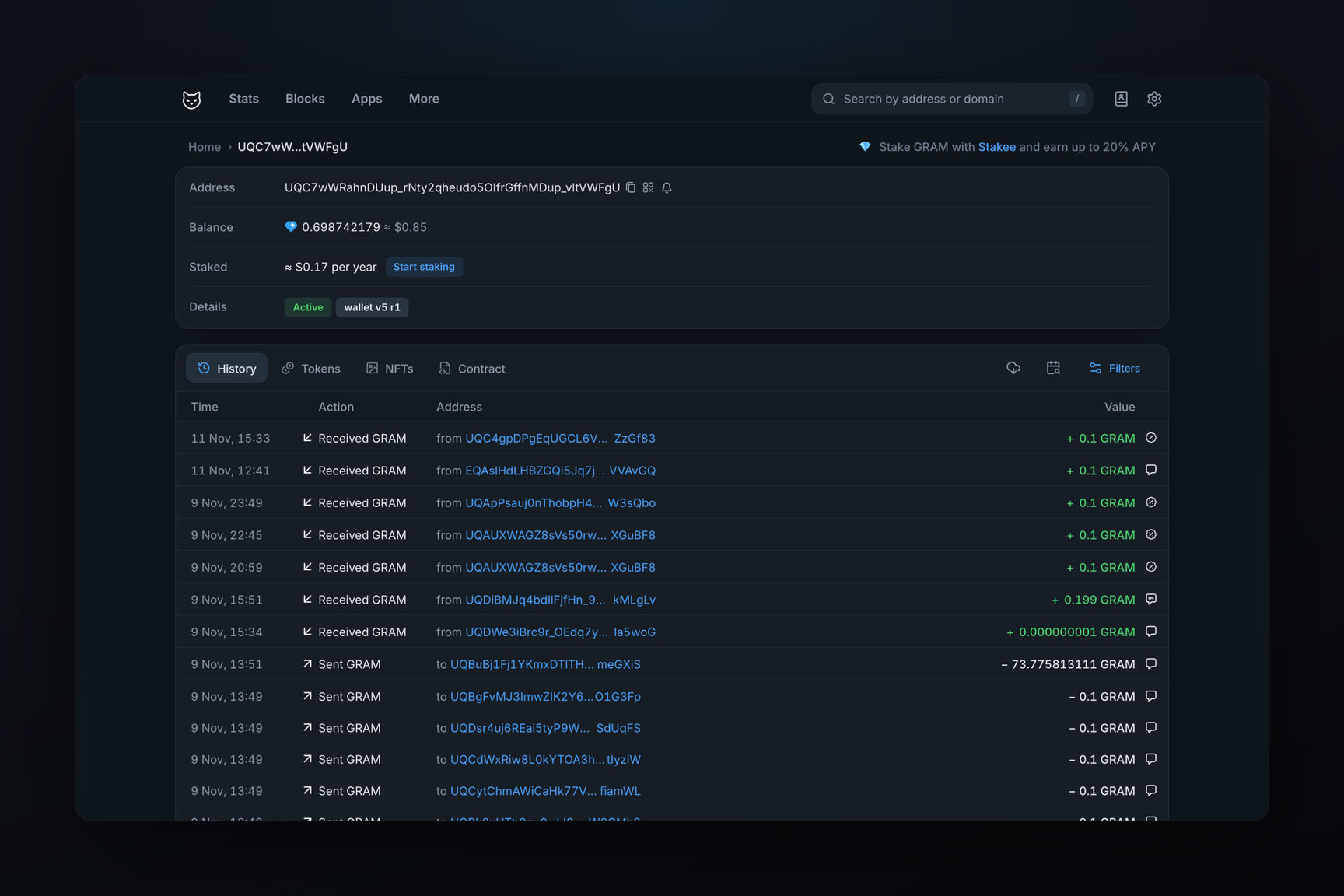
Telegram has stopped sending notifications about advertising transfers in Gram Wallet. Such transfers are now visible only in the wallet's transaction history, and the service account no longer posts about them in the chat. Notifications about regular transfers from other wallets arrive as before. This affects everyone with a Gram Wallet: in early November, ads were reaching wallets as tens of thousands of transfers a day.
What changed
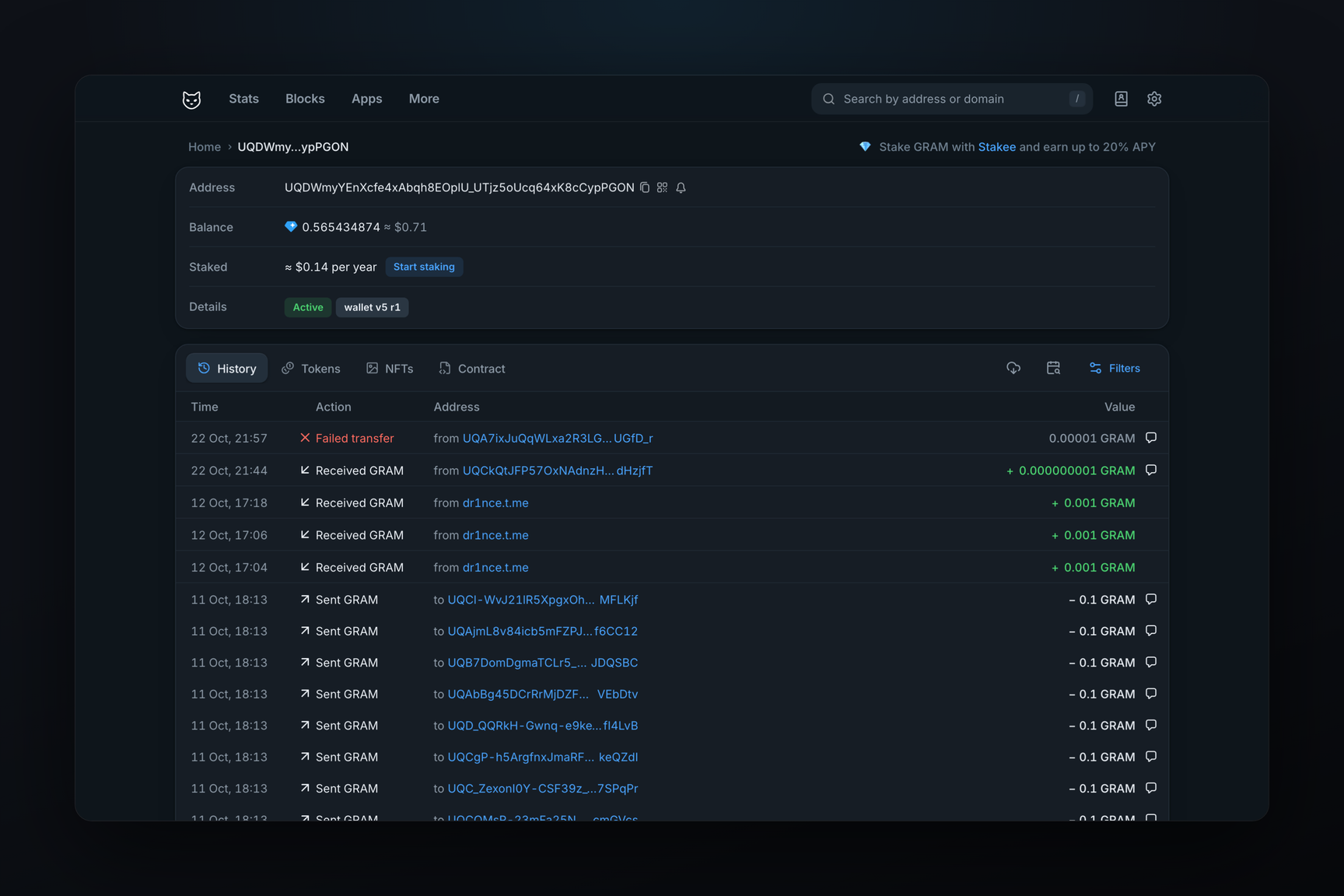
For every incoming transfer of 0.1 Gram or more, the wallet's service account sends a message, «Someone sent you 0.1 Grams», and shows the transfer comment under the amount. On TON, the comment travels together with the money, and any sender can write anything in it. As a result, for 0.1 Gram plus the network fee, any text landed in the Telegram chat list on behalf of the service account. That mechanism, and how much it cost the senders up to late October, are covered in the piece on spam and free transfers.
Such transfers are now filtered out. The money still reaches the wallet, and the transfer with its comment sits in the transaction history, but no chat message about it appears.
The notification threshold has not changed. In the app configuration the server hands out to clients, wallet_transfer_min_nanos is still 100,000,000, that is 0.1 Gram, and that configuration last changed on November 4. The client API schema is also the same: the service message about a transfer, messageActionGramTransfer, still carries a comment field, and the latest schema update came out on November 5. So the decision whether to send a notification is made by the server.
Telegram has not explained how exactly the server tells an ad from a regular transfer. One possibility is that it looks at the sender's behavior: ads go out as thousands of identical transfers from one address within minutes, and a regular transfer does not look like that. This is a hypothesis, with no confirmation.
What to do
There is nothing to configure. Advertising transfers still arrive in the wallet, and the 0.1 Gram from each stays with the recipient: they are visible in the transaction history along with the text.
It is better not to open links from comments in the history. A text that refers to Telegram or to Pavel Durov is written by the sender of the transfer, not by Telegram: anyone can sign a comment with any name.
If a transfer from someone you know arrived without a chat message, look for it in the wallet's transaction history.
How much advertising arrived before the fix
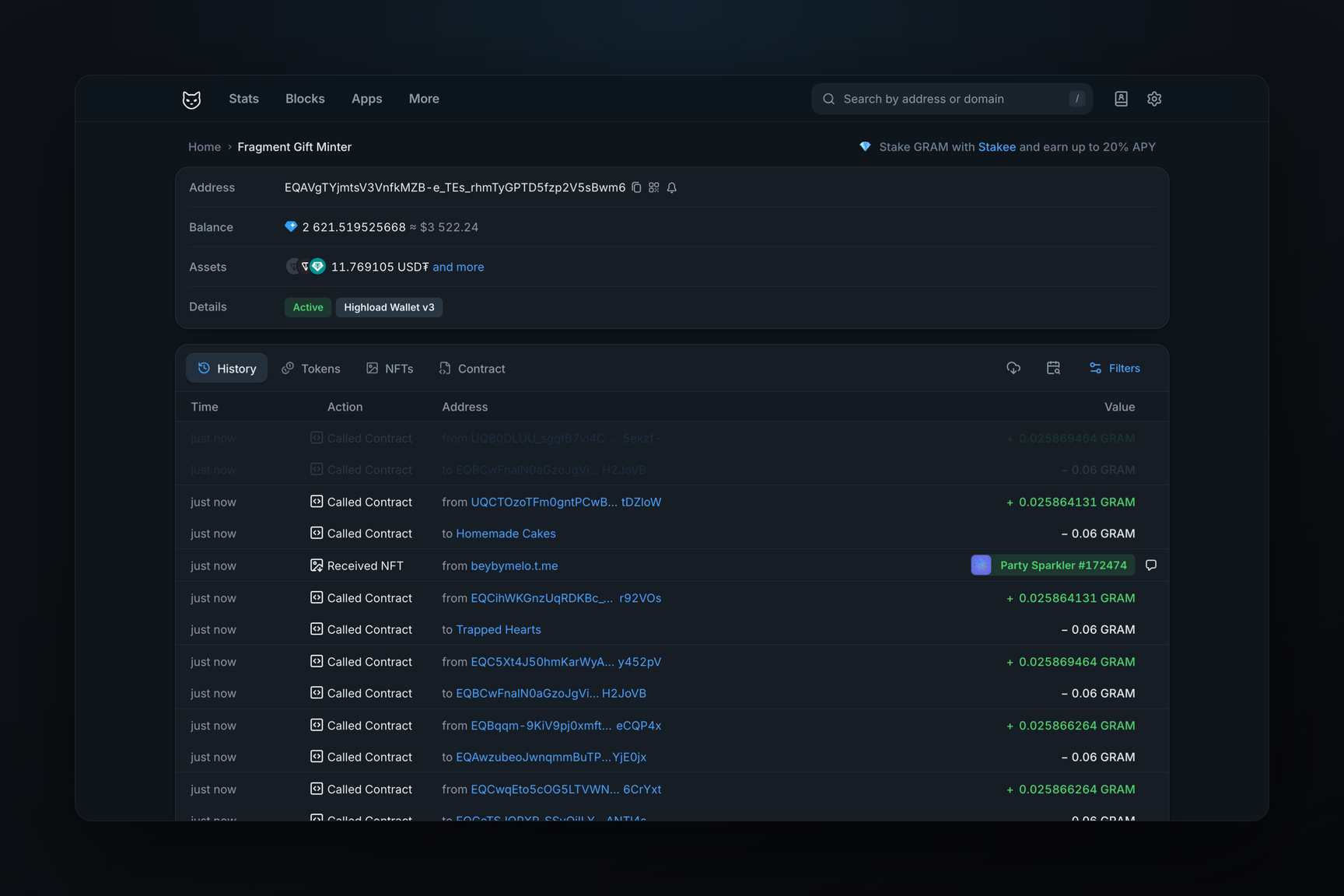
From September 9 to October 23, Telegram wallets received about 40 thousand advertising transfers. By November, roughly the same number was arriving per day: from November 7 to 9, Gram Wallet addresses received, by a sample of the network feed, about 35 thousand transfers a day with a comment and 0.1 Gram or more, nearly all of them from mass senders. That is about 3,500 Gram a day, roughly what spammers spent over the month and a half up to late October.
The advertisers changed too. In October, most of the campaigns were paid for by Russian-language services. In November, nine out of ten advertising transfers are written in Chinese and invite people to online casinos and to escrow services for USDT trading. Among the rest there are ads for leveraged trading with Durov's name in the first line.
The ads went out in waves. One address sent 4,335 transfers of 0.1 Gram each in ten minutes on November 9, 433.5 Gram on a single casino ad.
What happened next
In the 24 hours before 14:00 UTC on November 11, Gram Wallet addresses received about 15 thousand advertising transfers; in the following 24 hours, about 3 thousand, almost five times fewer. The largest campaigns last went out on November 11 before 13:00 UTC and did not appear in the sample after that. Among comment transfers after that, a noticeable share are payouts from game bots with labels like «Refund» and «Win».
The decline began on November 10, before the fix was reported, and exactly when the filter was switched on is unknown.