gram news

TON Blog archive

The TON Foundation blog, from blog.ton.org and the ton.org newsroom. Both now redirect every post away, so these copies come from the Wayback Machine, each with its original date and a link to the snapshot it was taken from.

366 posts

202616

News

Consumer Crypto Payments Don’t Have a Tech Problem - They Have a Product Problem

Stablecoins have proven their value in institutional and cross-border finance, yet consumer crypto payments remain niche—not because the technology doesn’t work, but because the product experience falls short. Today’s blockchains function effectively as payment rails, but lack the simplicity, integration, and distribution needed to change everyday user behaviour or merchant adoption. In markets where traditional systems are inefficient, crypto already thrives by solving real problems, but in developed economies it fails to offer a clearly superior alternative. The path to mainstream adoption lies not in better infrastructure, but in building seamless, intuitive products embedded within platforms people already use—an approach exemplified by TON’s integration with Telegram, which could bridge the gap between powerful crypto rails and real-world consumer payments.
News

Payment Infrastructure, Stablecoins, and Settlement

Digital payments are already dominant at the consumer level, but the underlying infrastructure remains costly, fragmented, and slow—especially across borders. Stablecoins and blockchain introduce a new, parallel settlement layer that addresses these inefficiencies by enabling faster, lower-cost, and globally accessible value transfer without relying on legacy correspondent banking or card networks. While not a replacement for existing systems, this infrastructure is gaining traction across consumer payments, B2B flows, remittances, and institutional settlement, offering clear advantages in speed, programmability, and cost predictability. To scale globally, however, it must meet key requirements such as transaction finality, stable fees, interoperability standards, and regulatory alignment. As the ecosystem evolves, a multi-chain, interoperable future is likely—one that reduces reliance on traditional payment monopolies and creates a more efficient, transparent global payments landscape

TON Is Now Up to 6x Faster: Sub-Second Finality Is Live

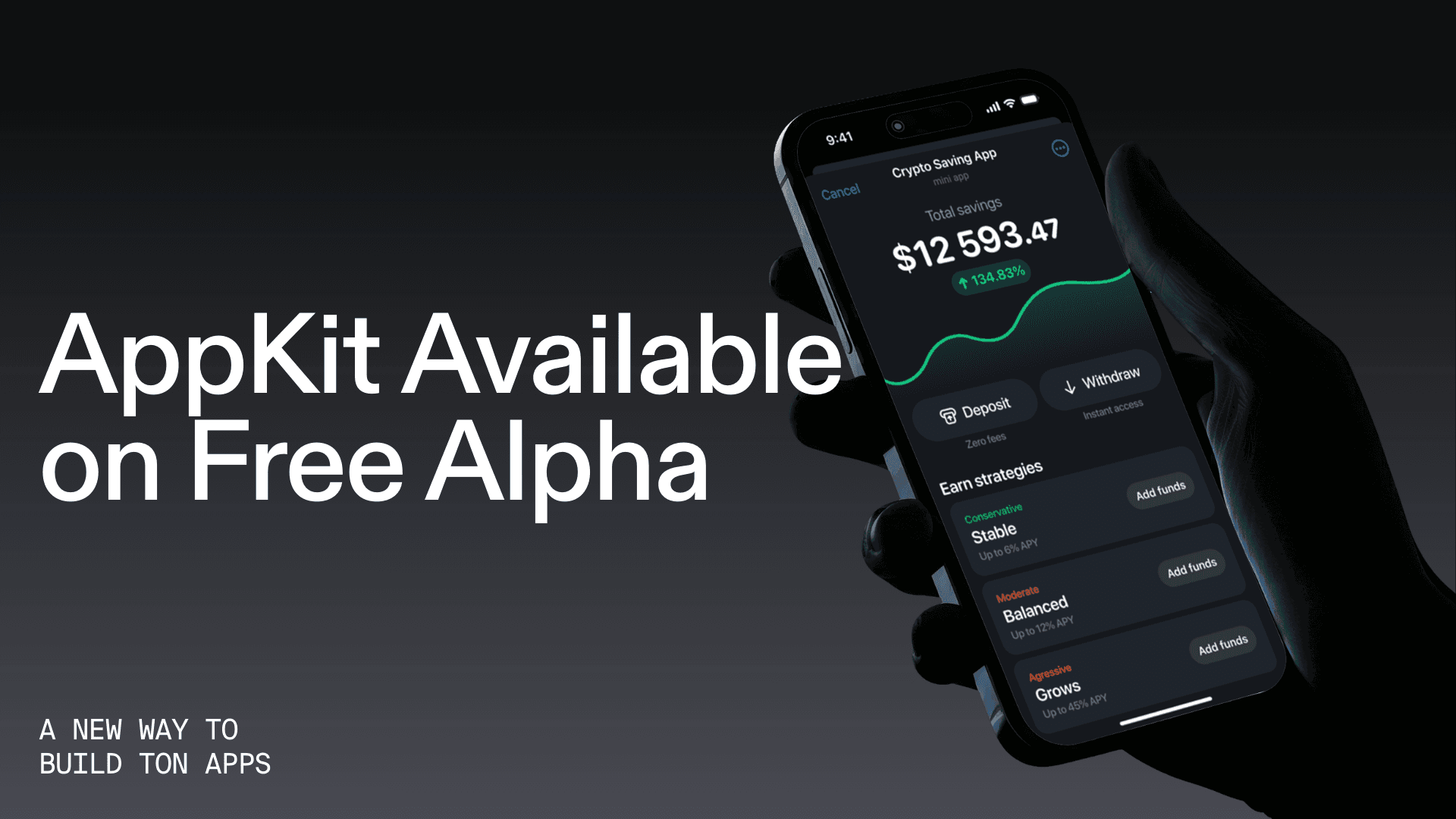
TON’s upgrade to sub-second finality fundamentally changes how applications should be built and experienced: with transactions now confirming in about one second and blocks arriving every 400 milliseconds, developers must move away from polling-based architectures and adopt streaming APIs to deliver real-time updates that match the network’s speed. This means designing user experiences with near-instant confirmations, minimal loading states, and continuous responsiveness—more like messaging apps than traditional blockchain interfaces. By integrating tools like TON Center Streaming API v2, TON Center v3, and AppKit, developers can ensure their apps fully reflect the protocol’s performance, handling rapid state changes efficiently and providing users with seamless, real-time interactions that align with TON’s new capabilities.

News

TON Partners with SCRYPT to Enable Institutional Access to Stablecoins

The Open Network (TON) Foundation has partnered with Switzerland-based SCRYPT to expand institutional access to stablecoins on the TON Blockchain. Through this collaboration, banks, fintechs, and enterprises can leverage regulated, institutional-grade infrastructure to access and settle USDT, enabling faster, low-cost global payments. By combining TON’s масштабable network—reaching over 1 billion users via Telegram—with SCRYPT’s compliant execution, liquidity, and fiat on/off-ramps, the partnership positions TON as a powerful alternative for next-generation financial infrastructure and cross-border settlement.

News

Modernising the Rails of Global Money Movement – Part 2

Part 2 explores how blockchain can enhance global payment infrastructure by addressing persistent inefficiencies in cross-border transactions, particularly in emerging markets where costs, delays, and lack of transparency remain significant. By enabling settlement on shared, synchronised ledgers and introducing models like the “stablecoin sandwich,” blockchain can reduce reliance on intermediaries, lower costs, and accelerate transaction speeds. These improvements unlock meaningful benefits for both individuals and businesses, from cheaper remittances to more efficient treasury operations. Rather than replacing existing systems, blockchain acts as a complementary layer—modernising payment rails to be faster, more transparent, and more accessible, especially in regions where traditional financial infrastructure is limited.
Accelerator

Modernising the Rails of Global Money Movement – Part 1

Global money movement underpins the modern economy, yet the systems behind it remain surprisingly complex. While today’s payment rails—such as SWIFT, correspondent banking, and card networks—are highly reliable across major economies, they often fall short in emerging markets, where transfers can be slower, more expensive, and less transparent. As financial technology evolves, blockchain is emerging not as a replacement for these established systems, but as a powerful complement. By enhancing speed, reducing costs, and increasing transparency, it has the potential to modernise the rails of global payments—particularly in underserved corridors.

News

The Agent Economy Has a Billion-User Head Start. It's Called Telegram.

Mastercard’s $1.8 billion stablecoin bet isn’t a debate—it’s a signal. While crypto argues over which chain wins, incumbents are quietly buying the future where infrastructure is invisible and everything “just works.” Agents don’t need more protocols; they need a home—inside platforms where users already are. With Telegram’s billion-strong network, TON’s native position, and new standards like MoonPay’s Open Wallet simplifying identity across chains, the stack is finally converging. The real question isn’t who builds the rails—it’s who owns the layer where agents live and transact in a $3–5 trillion economy.

News

TON Foundation Partners with Banxa to Enable Stablecoin Payments for Businesses Across Asia

Stablecoins move billions in value every day, but for most small businesses across Asia, accessing that infrastructure still means navigating complex exchanges, fragmented rails, and unclear compliance. That changes today. TON Foundation has partnered with Banxa, an OSL Group company, to bring regulated stablecoin payment infrastructure directly to thousands of SMEs across the Asia-Pacific region. The partnership positions TON as an operational payments layer for real-world commercial activity in one of the world's most active business and trade regions.

2025125

Learn, 2025

Learn

Tokenization and Embedded Finance: Building the Foundations of the Next Financial Era

Tokenization makes it possible to represent assets digitally and securely, while embedded finance brings financial functionality directly into the digital platforms that people already use every day. Together, they are redefining how value is created, exchanged, and stored, paving the way for a future financial system that is more inclusive and more seamless than what we have today.

News

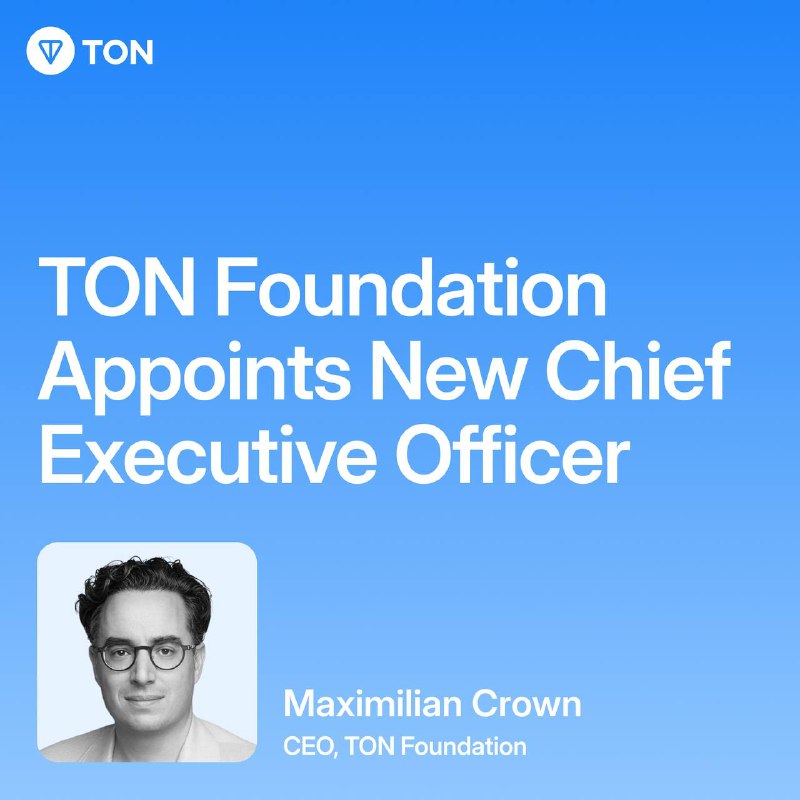
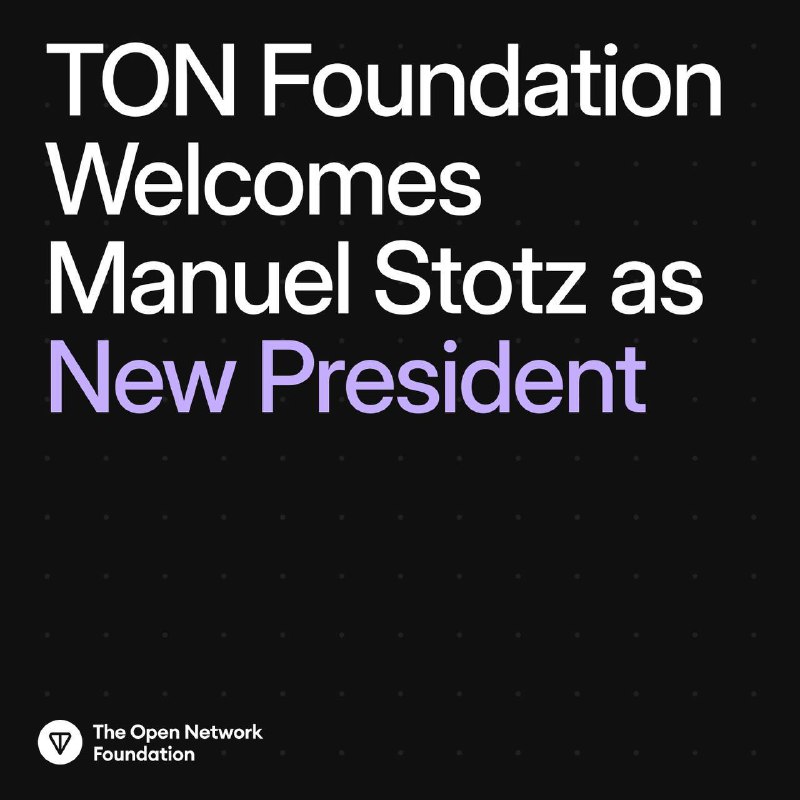
Max Crown Appointed President and CEO of TON Foundation as Manuel Stotz Steps Down to Focus on TON Strategy Co.

"It's an honour to take on this expanded role and continue building on the incredible foundation Manny helped establish," said Crown. "It reflects the Foundation's full confidence in our shared vision: to place TON at the heart of a decentralized future spanning finance, gaming, digital ownership, and more. I'm excited to lead this next chapter alongside our community and partners."

Learn

Stablecoins on TON

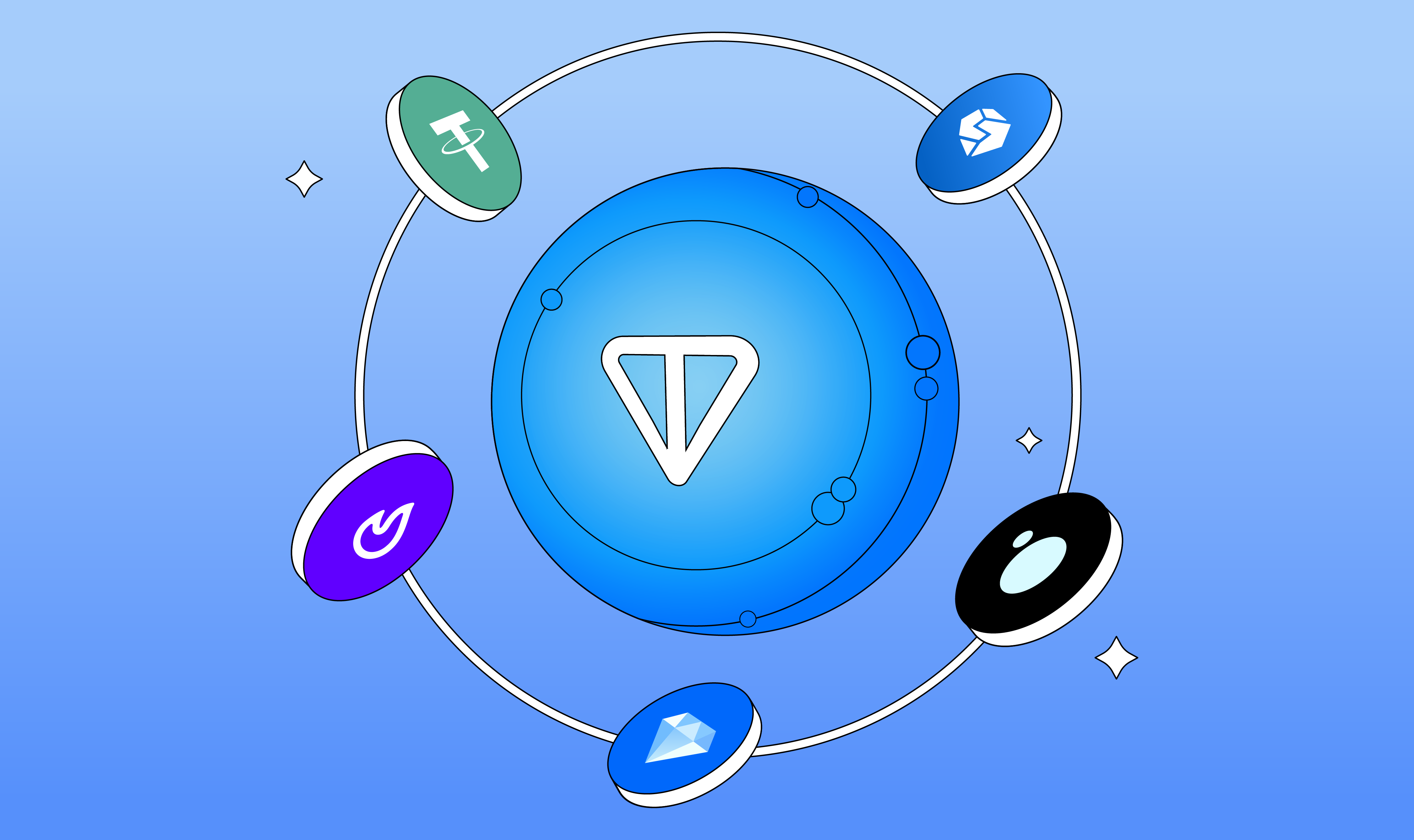
Stablecoins are one of crypto’s most versatile and adopted technologies. Pegged to external assets, such as fiat currencies like the US dollar, they provide a more stable medium of exchange and store of value. Stablecoins are widely used for making cross-border payments, as liquidity in DeFi protocols, to fulfil treasury operations, and as a valuable way to empower those in underserved markets with access to financial tools. Their stability and efficiency as a digital currency make them valuable to both institutions and everyday users.

Community, 2025

Community

TON Innovators: True World

Backed by a team with deep Web2 gaming experience, True World ditches the mindless grind for strategy, community, and real rewards, pulling in 2M+ players. From clan battles to city conquests, it layers competitive gameplay, NFT integration, and a player-driven economy into an experience that keeps players coming back. We spoke with the True World team to learn more about their vision, gameplay mechanics, and what’s next. Let’s dive in.

Community

Future Giants: Aqua Protocol

Meet Aqua Protocol, a decentralized finance platform built on TON. Aqua Protocol introduces an alternative method for minting AquaUSD, an overcollateralized stablecoin, by allowing users to secure liquidity without liquidating their crypto holdings. The platform supports borrowing, yield strategies, and stable swaps, providing an alternative to centralized stablecoins like USDT. This interview offers a closer look into the vision behind Aqua Protocol, how AquaUSD works, and what’s next for the protocol.

Development

TON on-chain data analysis: quickstart on Dune

With TON now the exclusive blockchain for Telegram’s mini app ecosystem, Web3 is reaching over 950 million users—bringing crypto into the hands of everyday people like never before. But with this kind of explosive growth, how do we track what’s actually happening on-chain? In this article, we’ll break down TON’s architecture and how you can use Dune’s blockchain data tools to make sense of this fast-growing network.

Community, 2025

Community

TON Giants: Delabs Games

Gaming has always been about pushing boundaries—whether through new mechanics, immersive worlds, or innovative technology. Delabs Games, led by industry veteran James Joonmo Kwon, has spent decades doing just that. The studio builds on a legacy of innovation—from early mobile RPGs to launching an Unreal Engine MMORPG on mobile. In this interview, we look closer at Delabs' journey, its approach to game development, and how it uses TON to explore the future of Web3 gaming.

News, 2025

News

TON integrates with LayerZero, bringing greater blockchain interoperability

TON Foundation has announced the integration of LayerZero, the leading interoperability protocol for cross-chain asset transfers. This integration aims to advance blockchain interoperability by connecting TON to over 100 other chains, starting with 12 chains that include Ethereum, Tron, and Solana, and combining LayerZero’s industry-leading messaging infrastructure with TON’s high scalability and low transaction fees.

2024138

Community

Future Giants: Fitton

In the latest installment of our Future Giants series, we spotlight Fitton. Fitton is carving out its place in Web3 wellness with its 30-Day Fitness Challenge, designed to inspire activity and reward consistency. Aimed at beginners and intermediates, the app addresses common fitness hurdles like low motivation and poor technique, which can lead to injuries. The Fitton team leveraged the simplicity of creating Telegram Mini Apps to make the application accessible beyond the blockchain community.

Learn

Telegram Stars: uniting developers, creators, and TON’s ecosystem

Earlier this year, Telegram launched its new in-app payment solution, turning heads and sparking curiosity. Whether buying digital goods and services or unlocking TON rewards and discounts, Telegram Stars is making it easier than ever for developers to thrive within the TON ecosystem. In this article, we’ll explore how Telegram Stars complements Toncoin, dispel misconceptions, and show why both are essential players in the journey toward decentralization.

News

Hackers League Sponsor Series | Arkham's Mission to Improve Blockchain Transparency

The Hackers League Sponsor Series celebrates the invaluable contributions of sponsors who help make the Hackathon possible. Today, we’re featuring Arkham, a diamond sponsor and leader in blockchain intelligence dedicated to shining a light on crypto market activity. Supported by renowned founders of Palantir and OpenAI, alongside major trading firms and venture capitalists, Arkham has built an AI-powered platform that unveils the real-world identities behind blockchain transactions.

News

TON Studio: Putting The Power Back In The Hands of Developers

Our mission at TON Studio is to enhance the developer experience within the TON ecosystem. To do that, we want to provide tools that eliminate the technical barriers between having an idea for a dApp and building and eventually launching it. Our determination to help developers realize their dream projects is why we’ve launched TON Studio: to provide the tools, resources, and expert engineering guidance to developers needed to build brilliant dApps.

News

Unlocking BTC’s Potential in TON: Introducing TON Teleport BTC

In the ever-evolving blockchain landscape, bridging traditional assets with DeFi ecosystems has become revolutionary, and TON is making bold strides to lead the way. Recently, we introduced TON Teleport BTC, a decentralized bridge allowing for the seamless transfer of BTC with TON’s network. This bridge enables BTC holders to leverage their assets within TON’s DeFi ecosystem, unlocking new possibilities, like yield farming, using Bitcoin as collateral. For BTC enthusiasts, it’s the first step in transforming dormant assets into opportunities for growth.

202375

202212

Development, 2022

Development

How to shard your TON smart contract and why - studying the anatomy of TON's Jettons

*Sharding* is a mature concept originating in [database design](https://en.wikipedia.org/wiki/Shard_(database_architecture)). It involves splitting and distributing one logical data set across multiple databases that share nothing and can be deployed across multiple servers. Simply put, sharding allows *horizontal scalability* - splitting data to distinct, independent pieces that can be processed in parallel.