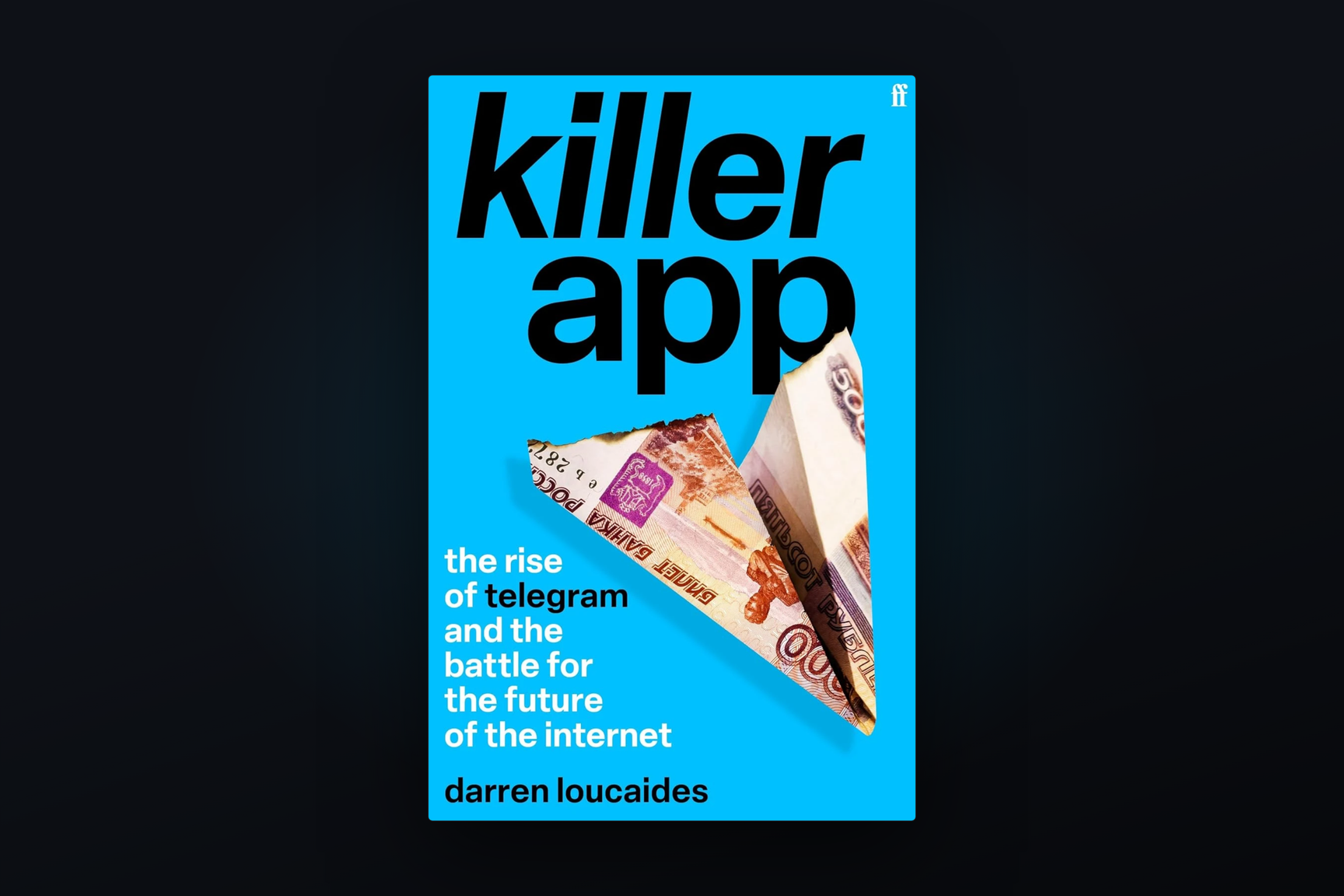
On November 5, the British publisher Faber is releasing Darren Loucaides' book "Killer App" about Telegram and Pavel Durov. A week before its release, the Financial Times published a review by technology columnist editor Elaine Moore. According to her summary, the book's main idea is that Durov publicly protests while quietly negotiating with authorities.
Release Date and Price
The full title of the book is "Killer App: The Rise of Telegram and the Battle for the Future of the Internet". It is a 368-page paperback in English, ISBN 9780571396221. The publisher's price is 14.99 pounds. On Amazon UK, you can pre-order it for 12.15 pounds. European bookstores list the same release date: 5 November 2026.
Loucaides writes for Wired, The Guardian, and Rolling Stone. He has been covering Telegram for over five years: in 2022, Wired published his extensive article about Durov, and the book grew out of the same investigation.
How the Book Differs from the Official Narrative
The official version states that the Kremlin seized VKontakte from Durov, he left Russia, and then created a secure messenger. Loucaides spoke with investors, former employees of both companies, and experts, and, according to the review, he uncovered a more convoluted story:
- Durov denied that Telegram was connected to VKontakte, but the Durov brothers began developing the app in 2013 while still working there. The book describes a dispute over a deal within VKontakte and a struggle for the rights to Telegram.
- Durov initially called his 2014 resignation from VKontakte an April Fool's joke.
- According to the book, many of these conflicts were driven more by money than by politics.
- After selling his stake in VKontakte, Durov, according to Loucaides, did not live in exile but continued to travel to Russia.
Security and Cooperation with Authorities
It has long been known that Telegram does not use end-to-end encryption by default (end-to-end means that only the interlocutors have the keys, and the server only sees encrypted text). Cryptographers' criticisms of Telegram's proprietary MTProto protocol are also well-known. The book adds another question to this.
Human rights groups accused Telegram of potentially helping the Kremlin intercept the correspondence of opposition figures. Loucaides found no evidence of this, but, according to Moore, he raises the question of whether there was an unspoken agreement. He draws on cases where Telegram negotiated with authorities in other countries, writing that business interests were prioritized over stated principles in these instances.
Arrest in France and Privacy Policy
In August 2024, Durov was detained in Paris. The charges relate to complicity in the dissemination of child sexual abuse material, drug trafficking, and fraud: French investigators link these to Telegram's failure to respond to authorities' requests. Durov was later permitted to leave France.
Here, the book sees the same discrepancy between words and actions. Telegram's early privacy policy stated: "We never share your data with anyone. No." Now, it states that in cases of suspected terrorism or other crimes, the service may disclose a user's IP address and phone number to authorities.
What the Review Says About the Book Itself
Moore calls the book a detailed account of the compromises and conflicts inherent in building a global technology company, and a useful addition to the literature on tech giants. She specifically notes that Telegram was created outside the US.
She considers the story of the author's unsuccessful attempts to secure an interview with Durov a weak point, given that Durov granted interviews to other publications, including the FT itself.
Ultimately, the review concludes that Durov in the book is not an ideologue but a pragmatist who changes his stance according to circumstances. Telegram has been banned, sued, and on the verge of financial crisis, yet its user base continues to grow and has already exceeded one billion.